A lay Catholic initiative
Young Catholics for Ordered Migration
Charity without order is not Catholic. We are lay Catholics — not the hierarchy, and not a political party — making the case from the Church’s own teaching that nations may welcome the stranger and regulate their borders for the common good.

Mission & Purpose
Faith informing the common good
YCOM Initiative is a professional lay Catholic effort to inform public policy with the enduring principles of Catholic social teaching. We gather and share articles, videos, and content from within the Church to strengthen a public conversation rooted in human dignity, the common good, and the pursuit of truth.
We approach policy with charity and seriousness, offering principled perspective rather than partisanship. Our aim is to help Catholics and their neighbors engage public questions thoughtfully, responsibly, and in good faith.
The Teaching of the Church
Catechism of the Catholic Church 2241
The more prosperous nations are obliged, to the extent they are able, to welcome the foreigner in search of the security and the means of livelihood which he cannot find in his country of origin. Public authorities should see to it that the natural right is respected that places a guest under the protection of those who receive him.
Political authorities, for the sake of the common good for which they are responsible, may make the exercise of the right to immigrate subject to various juridical conditions, especially with regard to the immigrants’ duties toward their country of adoption. Immigrants are obliged to respect with gratitude the material and spiritual heritage of the country that receives them, to obey its laws and to assist in carrying civic burdens.
— Catechism of the Catholic Church, §2241
The full argument is in one essay: what paragraph 2241 actually says, and what has been left out.
Featured Articles & Content
Reading and reflection from within the Church
Articles
Essays and analysis
Considered writing on public questions, examined through the lens of Catholic social teaching and the enduring principles of the common good.
From the Library
Latest essays
-
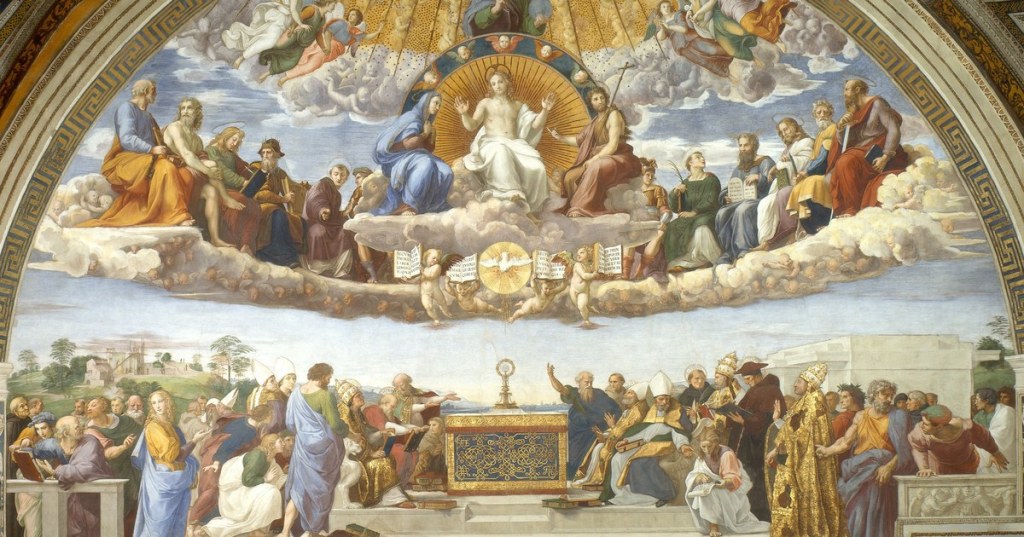
Reading the Church’s Documents Well
How to read Church documents: not every teaching carries the same weight. A guide to dogma, doctrine, encyclicals, the Catechism, and prudential judgment.
-

Immigration and Assimilation in the Mosaic Law
Immigration in the Mosaic Law: one law for native and sojourner, but full membership took a rite of entry and time, as Exodus, Numbers and Deuteronomy show.
-

Aquinas on Immigration: The Traveler, the Resident, and the Citizen
Aquinas on immigration: St. Thomas distinguishes the traveler, the resident, and the citizen, and explains why ancient peoples granted citizenship slowly.
Catholic Public-Policy Perspective
A principled voice in public dialogue
Catholic social teaching offers a coherent framework for thinking about public life — the dignity of the human person, the common good, solidarity, and subsidiarity. We draw on that tradition to advocate for responsible public dialogue.
- Policy examined through the dignity of every human person
- Dialogue that is charitable, serious, and non-partisan
- The common good placed above narrow interest

Stay Informed
Get the next essay in your inbox
We publish considered essays on Catholic social teaching and public life. Subscribe to receive each new piece directly — no noise, no partisanship, just principled reflection.