


What the Numbers Show for American Citizens
The Current Situation and Our Obligation as Catholics
Since 2010, more than 15 million persons have obtained lawful permanent resident status in the United States, and an additional 14 million unauthorized immigrants were present as of 2023. More than 15 percent of the U.S. population is now foreign-born, a record-high percentage in the history of the nation.
Paragraph 2241 of the Catechism of the Catholic Church states that political authorities, for the sake of the common good for which they are responsible, may make the exercise of the right to immigrate subject to various juridical conditions, especially with regard to the immigrants’ duties toward their country of adoption. Given the scale of immigration into the United States and the prospect of its continuation, American Catholics have a particular obligation to examine the effects of these inflows upon the material and social common good of the political community, both in the near term and over the longer horizon.
The contribution of immigration to the supply of labor is widely noted. A complete assessment, however, requires attention to its effects upon other dimensions of the economy and upon broader indicators of societal condition. These include the fiscal position of the government, the employment of the existing workforce, public safety, the capacity of medical institutions, overall economic growth, and social cohesion. The present paper sets out a series of metrics relevant to that evaluation.
Statistical Reflections of the Effects of Immigration into the U.S.
The Fiscal Landscape
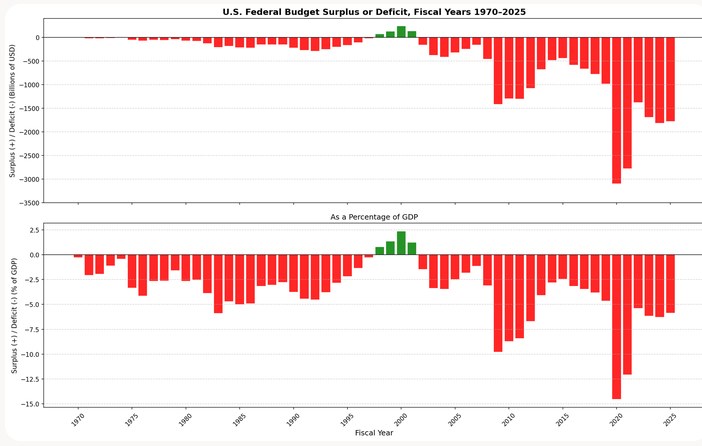
A comprehensive accounting of the fiscal effects of immigration would require examination of government budgets for particular services, a task that lies outside the scope of this paper. It is possible, however, to describe the general fiscal environment in which immigration is occurring. Data from the Federal Reserve Bank of St. Louis show that the U.S. federal deficit has followed an overall trend of rapid growth. The U.S. Treasury reported that the total federal debt exceeded $40.38 trillion as of October 15, 2026. Immigration is only one variable among many that bear upon revenues and expenditures. The coincidence of a record foreign-born population with sustained deficit expansion and rising debt nevertheless indicates that net fiscal contributions from recent inflows have not offset the broader structural pressures upon the public accounts.
Labor’s Winners and Losers
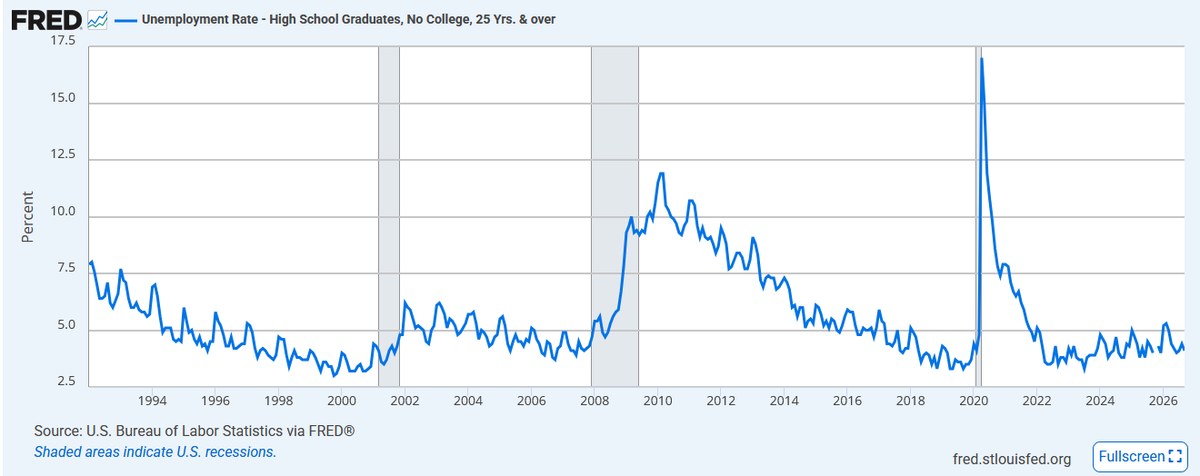
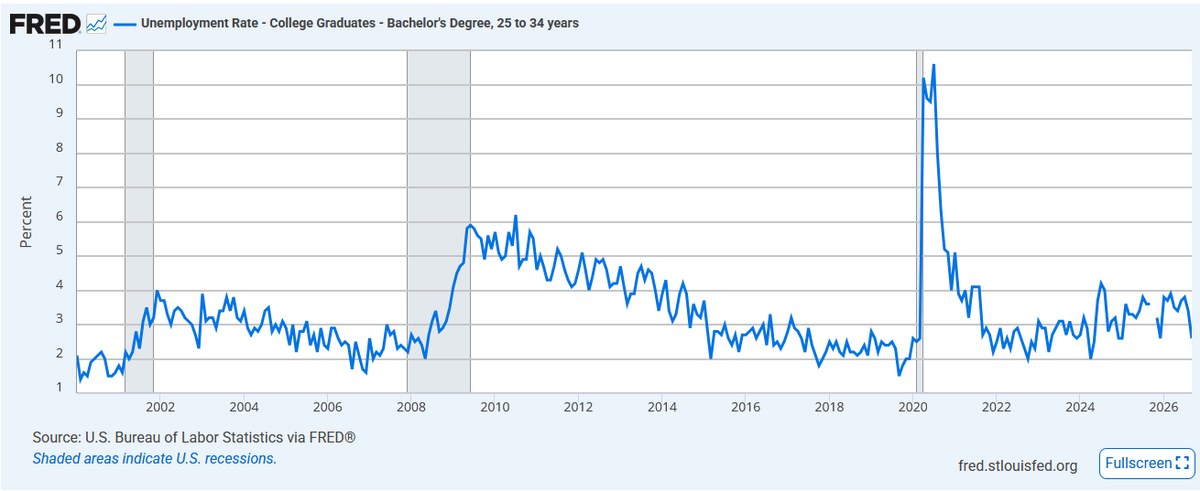
Data from the Federal Reserve Bank of St. Louis shows that the unemployment rates for high school graduates over age 24 without college degrees, and for college graduates ages 25 to 34, have been generally increasing since 2022, a pattern without precedent in non-recessionary periods since 1992. Whatever other effects immigration may have produced, the recent growth in inflows has not been accompanied by a net increase in the employment of the U.S. population. Research on the labor-market effects of immigration supplies further detail. A 2020 study by the National Bureau of Economic Research concluded that labor force competition has a net negative impact on the segment of citizens who are most vulnerable: younger and lower-skilled workers. This finding is of particular relevance in light of the evidence presented in the following paragraphs.
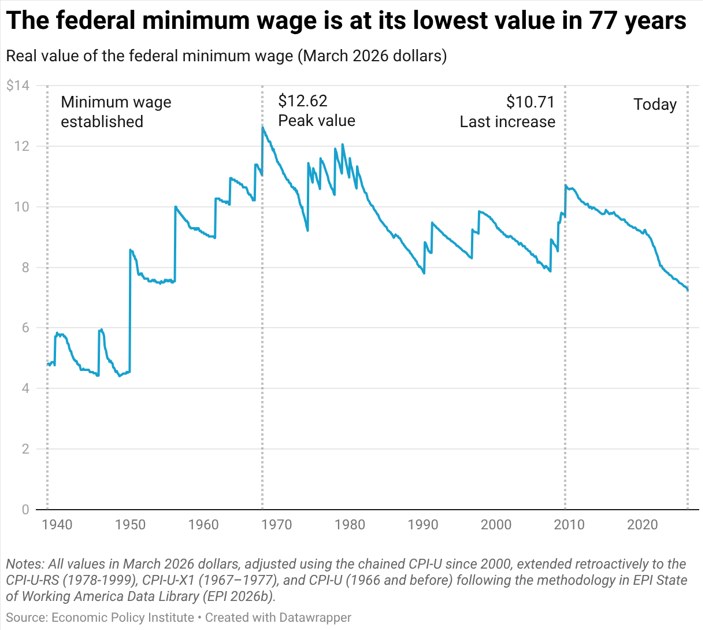
Wage trends likewise indicate difficulties for the more vulnerable segments of the workforce. In the lowest tier of employment, the federal minimum wage, measured in inflation-adjusted 2026 dollars, stands at its lowest level since 1949.
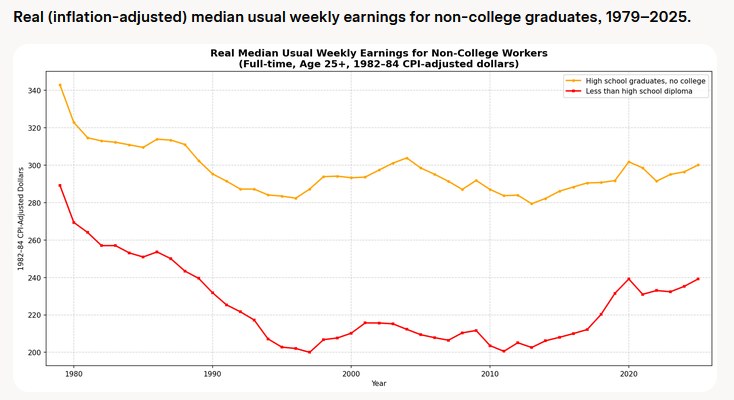
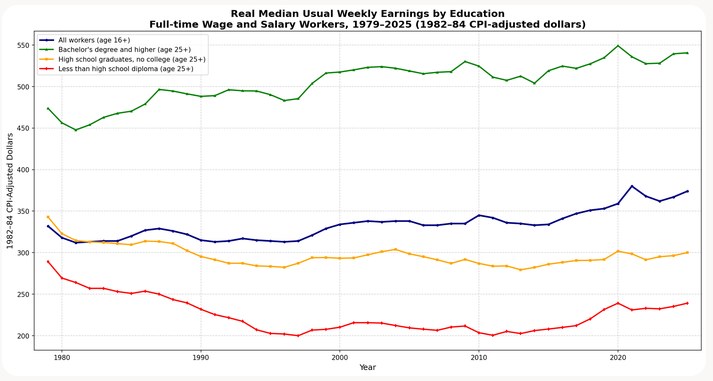
Median usual weekly earnings for categories of workers, deflated by the annual average Consumer Price Index, show that the wages of non-college graduates fell significantly after 1979, have not fully recovered, and have fallen progressively further behind the earnings of college graduates. These long-term patterns of stagnation for non-college workers coincide with the multi-decade rise in low-skilled immigration and are consistent with the finding of competitive pressure at the lower end of the wage distribution.
Public Safety
As of October 10, 2026, 15.8 percent of federal inmates were non-citizens. In fiscal year 2025, non-U.S. citizens committed 3,035 drug trafficking offenses, 663 fraud, theft, or embezzlement offenses, 431 firearms offenses, and 375 money laundering offenses. Relative rates of crime do not alter the fact that every offense committed by an immigrant is an offense that would not have occurred in the absence of immigration. Each such offense generates additional public costs for incarceration, victim services, and law enforcement that are borne by the existing political community.
Education Resources
In fiscal year 2024, the United States spent an average of $17,619 per pupil on kindergarten through twelfth-grade education. The arrival of immigrants, both legal and unauthorized, has therefore placed additional demands upon educational capacity, raising costs and increasing the incidence of overcrowding. A 2019 report by Barbara Hornick-Lockard observed that overcrowding occurs when a school facility enrolls more students than it was designed to accommodate. Most schools identified as overcrowded are in areas where the school-age population is growing rapidly, particularly in California, Florida, Texas, and Las Vegas, Nevada. Overcrowding is also a chronic condition in the largest urban areas, including New York, Chicago, and Los Angeles, as immigrant populations continue to expand and additional public education options are made available.
A 2024 Reuters report, based on surveys sent to 10,000 school districts, noted that half a million school-age children of immigrants had arrived in the United States since 2022 and had strained school budgets while leaving teachers to contend with language barriers. One-third of the districts that responded reported that the increase in immigrant children had produced a significant impact upon their operations. In a hypothetical school district of 25,000 students that receives an additional 5,000 immigrant students, the added cost would approximate $89 million, a substantial burden for any community.
The longer-term educational outcomes of immigrants are also relevant. A 2017 academic study of the Mexican-heritage population, a major component of immigration to the United States, found that generational differences in education do not conform to the predictions of assimilation theory. Education for the third generation remains similar to that of the second generation and falls behind that of non-Hispanic whites. This pattern is inconsistent with the expectation that assimilation will produce equal social outcomes across groups and carries implications for long-term social cohesion and fiscal capacity.
Hospital Costs
From 1970 to 2024, total health spending in the United States, measured in 2024 dollars per capita, rose from $2,208 to $15,474. In the same year, 46 percent of unauthorized immigrants, 21 percent of lawfully present immigrants, and 7 percent of naturalized citizens reported having no health insurance, while the figure for U.S.-born adults was 6 percent.
Half of uninsured immigrant adults reported having no usual source of health care other than emergency-room treatment. UnitedHealthcare estimates a $2,500 difference between the median cost of an emergency-room visit and the median cost of an urgent-care visit, the former standing at $2,750. It has been estimated that 13 percent of undocumented immigrants use emergency-room services each year. The costs of care for uninsured immigrants are borne by the federal government, the states, hospitals, and, ultimately, taxpayers.
Applying the 14 million estimated total of undocumented immigrants, the 13 percent annual rate of emergency-room use, and the $2,750 median cost per visit produces an annual cost to the public of more than $5 billion for this category of care alone. The total costs borne by the community are higher still, because uncompensated care is also provided outside the emergency room setting.
Increased Competition for Affordable Housing
Housing is, as with health care, a principal expense for households. The volume of immigration has produced measurable effects upon this market for years. A 2007 study by Albert Saiz found that the positive association of rent growth and immigrant inflows is pervasive across metropolitan areas. An immigration inflow equal to 1 percent of a city’s population is associated with increases in average rents and housing values of about 1 percent, an economic impact an order of magnitude larger than that observed in labor markets.
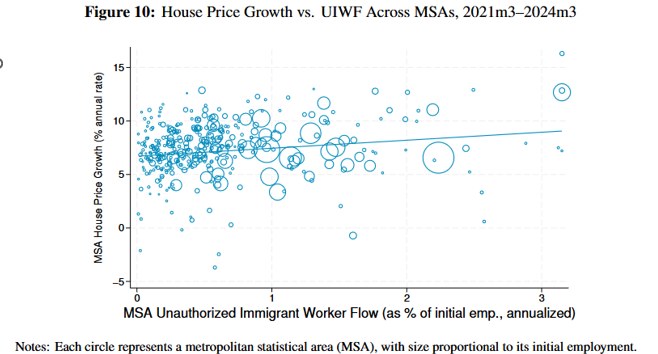
A 2026 working paper from the Federal Reserve Bank of San Francisco found that unauthorized immigrant worker flows increased local employment approximately one-for-one, with mixed evidence of wage depression. The same flows raised house prices and rents without expanding housing supply and reduced labor income per capita and government transfers. The reduced affordability of housing for existing residents must be included in any assessment of the common good. The accompanying graph from the report shows the association between house prices and the unauthorized immigrant workforce across metropolitan statistical areas.
Remittances as a Loss to the U.S. Economy
Remittances sent by immigrants in the United States to their countries of origin are spent abroad. They constitute a substantial transfer of resources out of the domestic economy and thereby reduce the extent to which earnings paid to immigrants circulate within the receiving community, relative to earnings paid to native citizens. A World Bank study reported that immigrants sent $81 billion in remittances to their countries of origin in 2022.
Keeping Score on Assimilation
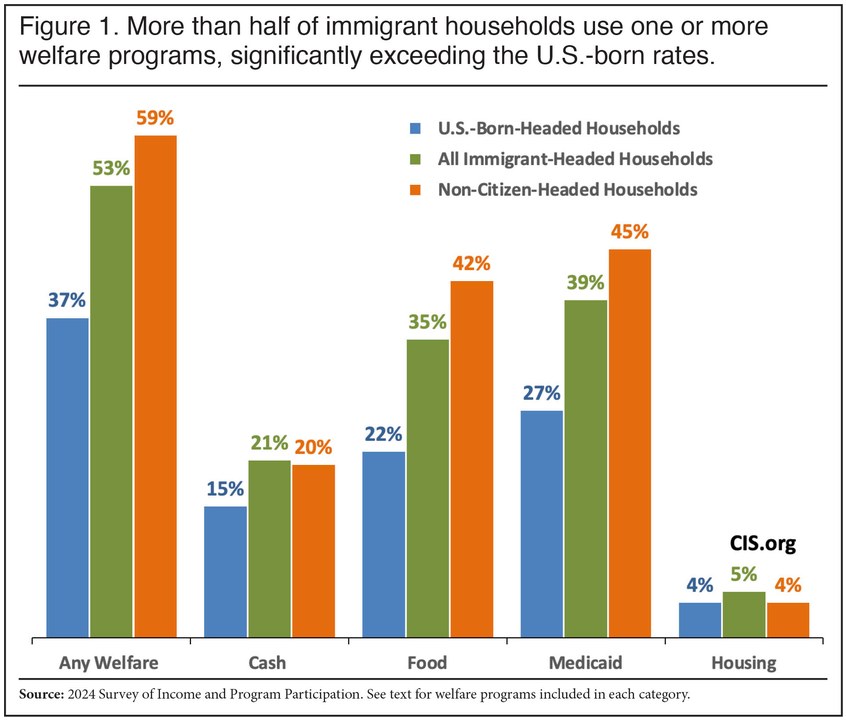
More than half of immigrant households use one or more welfare programs, a rate significantly above the rate for U.S. citizens, according to a 2024 report by the Center for Immigration Studies.
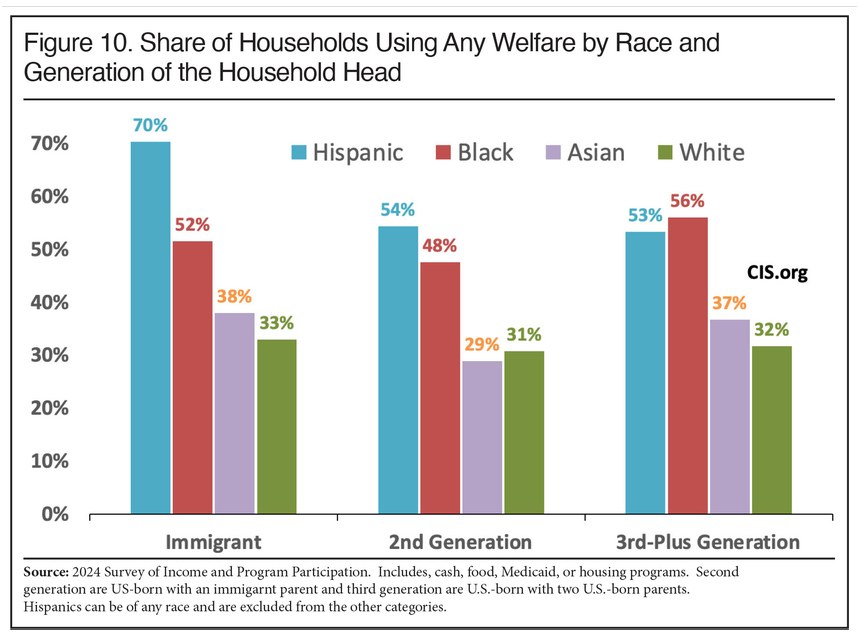
A substantial share of immigrants ages 5 and older, 47 percent or 23.5 million persons, reported speaking English less than well. This group accounts for more than 80 percent of individuals in the United States with limited English proficiency.
Paragraph 2241 of the Catechism obliges prospective immigrants to respect the material and spiritual heritage of the country that receives them and to assist in carrying its civic burdens. Elevated rates of welfare use, and delayed acquisition of the common language limit the capacity of immigrants to meet those obligations.
Potential Resource for Civil Authorities and the Faithful
The indicators assembled above, fiscal pressure, labor-market effects upon lower-skilled citizens, educational and health-care costs, housing inflation, remittance outflows, and incomplete assimilation, show that the scale and composition of recent immigration have imposed measurable costs upon the material and social common good of the existing American political community. Under paragraph 2241 of the Catechism, political authorities may, and for the sake of that common good must, subject the exercise of the right to immigrate to juridical conditions that protect the heritage, laws, and civic burdens of the receiving nation. The statistics presented supply empirical grounds for that prudential judgment.
Notes
4. Federal Reserve Bank of St. Louis, Federal Surplus or Deficit [-] (FYFSD), FRED.
5. U.S. Department of the Treasury, Debt to the Penny, Fiscal Data, accessed October 15, 2026.
10. Federal Bureau of Prisons, Inmate Citizenship, October 10, 2026.
11. Peter G. Peterson Foundation, “How Is K-12 Education Funded?,” July 22, 2025.
12. Barbara Hornick-Lockard, “Overcrowding in Schools,” EBSCO Research Starters, 2019.
17. UnitedHealthcare, “Comparing Costs: Urgent Care, ER, Virtual Visits and More.”
21. World Bank data as reported via Econotimes, October 25, 2024.
